About the C-3 Book Series
In February 1954 the National Speleological Society conducted its first large-scale, multi-day expedition devoted to the comprehensive exploration and study of a single cave system. In doing so, it set the stage for what is now known in America as “project caving.”
The site was Collins Crystal Cave…located on Flint Ridge in rural Kentucky. A private holding abutting Mammoth Cave National Park, the lengthy name of Collins Crystal Cave was dubbed “C-3” for vocal expediency. And the subject 1954 exercise is widely known as the C-3 Expedition.
This was an era when massive military-style assaults were enjoying success on 8,000-meter peaks in the Himalayas, and the triumphs of American forces in World War II were still fresh in the collective memory of the citizenry. Thus—in a formalism that would seem curious to the independent-minded cave explorers of today—the C-3 brain trust naturally elected to employ a similar organizational modality for their own expedition.
In basic terms, imagine a pyramid-shaped organizational structure with the majority of assets located near the base of the pyramid…and decreasing in size and extent as you move toward the top. This entire arrangement is designed to facilitate success for those populating the very apex of the pyramid.
As adapted specifically for the C-3 Expedition, the main concentration of resources was to be located at a topside base camp, with one (or more) forward operating posts located underground near the frontier…and occupied by a small vanguard of skilled personnel. Major responsibilities of the base camp included providing reliable voice communication throughout the chain of command, and executing an uninterrupted flow of food and supplies to those operating at the tip of the spear.
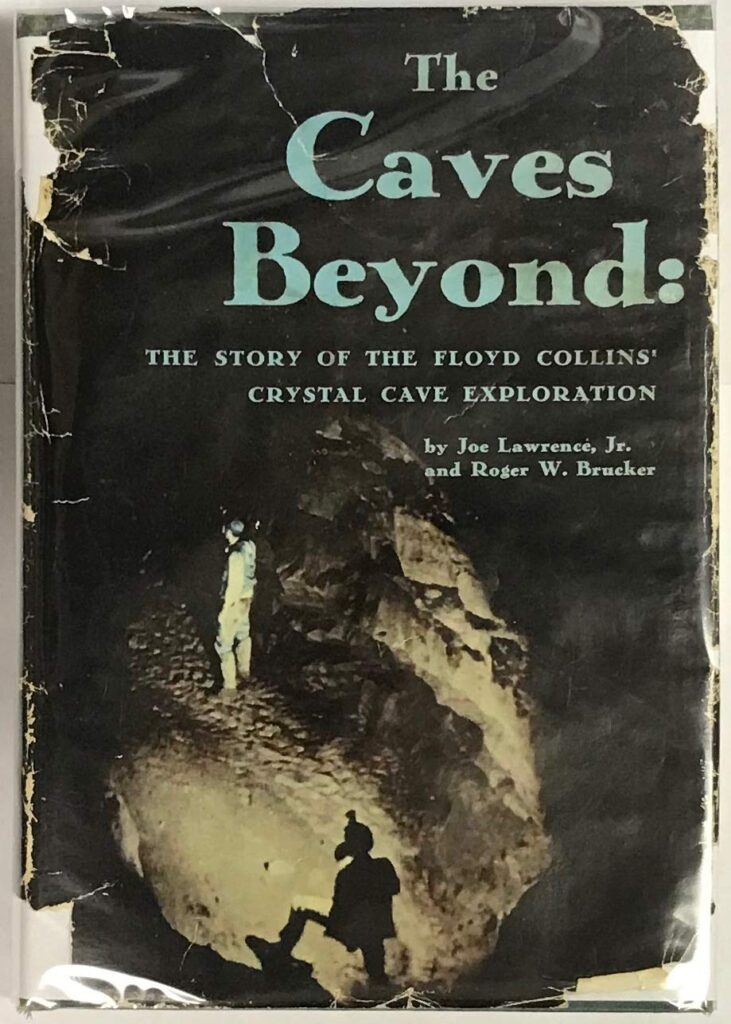
Upon completion of the enterprise, Expedition Leader Joe Lawrence and Expedition Member Roger Brucker chronicled an official history of the C-3 project. The resulting book, entitled The Caves Beyond, remains a classic in American caving literature. Indeed, many subsequent speleologists attribute their initial interest in the sport to reading The Caves Beyond when they were young.
Today, the Archives Division of the National Speleological Society maintains physical possession of many of Joe Lawrence’s papers and working files germane to the C-3 Expedition. But, to the best of our knowledge, few people have studied these historic artifacts…and most of these documents have never been formally published before. The present series is an effort to remedy that deficiency, and to preserve these fascinating and invaluable resources for future generations. Additionally, a few supplemental materials that seem complementary to the Joe Lawrence Collection are incorporated herein.
It is, of course, acknowledged that certain originals may be lost, destroyed, damaged, or otherwise inaccessible. Nevertheless, it is believed that we have now identified a comprehensive enough ensemble that it makes sense to publish the presently available materials. To this end, the items reproduced in the present series herald from the Archives of the National Speleological Society in Huntsville, Alabama; from the National Cave Museum in Park City, Kentucky; from the Cave Research Foundation facility in Hamilton Valley, Kentucky; and from several private collections scattered about the country.
In some cases, multiple drafts and revisions of source documents survive and, if so, these assorted incarnations are reproduced in this series. And, for the convenience of future researchers, the materials in this series have been grouped into various topical categories. When a certain document has been deemed particularly germane to more than one of these topics, it may be reproduced in each respective category.
When assembling volumes of these sorts, one must wrestle with the amount of after-the-fact editing that might be appropriate. In the end, we decided that the original documents—plus any age-related stains, imperfections, and occasional annotations—are so charming and so historic that these artifacts should be reproduced substantially “as is.”
It is inarguable that these documents afford a “behind the scenes” glimpse into certain aspects of the C-3 Expedition. But it is hoped that they also will provide a cherished window into the book—and into the adventure—that celebrates The Caves Beyond.
About the book editor and designer
This book series came about when David W. Hughes discovered a treasure trove of historic document in the National Speleological Society (NSS) library. Dave scanned all the documents and organized them into a six-book series so the documents can be easily available to the caving and historical research communities.
A native of Pennsylvania, Dave began serious cave exploring while an undergraduate electrical engineering student at the Georgia Institute of Technology. Over the ensuing decades he has pursued various speleological interests in many states, and in several foreign countries. Dave works in the general field of semiconductor electronics—including the related intellectual property issues—for a small engineering firm headquartered in Huntsville, Alabama.

Dave teamed up with Jennifer Pinkley to design the book series. Jennifer created each volume of the book, creating the covers, and worked with the printing company to produce the hardcover books. Jennifer started exploring caves as a teenager with the Girl Scouts and has been an active cave explorer ever since. She is the author of the award-winning book Fern Cave: The Discovery, Exploration, and History of Alabama’s Greatest Cave.
